
10 to 15 minutes
That's how long a normal defrost cycle runs. If your unit is still showing defrost well past that, something is stopping it from switching back to heat.
Winters here mean the mini split runs most days, and seeing "defrost" on the display while cold air blows into the room throws people off. It feels like the unit broke, especially when it happens more than once in a cold stretch. Before calling anyone, it helps to know whether this is normal behavior or a sign something's wrong.
The outdoor coil picks up frost when it's cold and humid outside, the same way a freezer does. Defrost mode reverses the system for a few minutes to melt that ice off the coil, and the indoor fan either slows way down or blows cold air during that time since it's not actively heating. Once the coil is clear, it switches back to heating on its own. On a cold, damp day here you might see this a few times. It only becomes a problem if the unit stays in defrost a long time, cycles into it constantly, or never goes back to blowing warm air afterward.
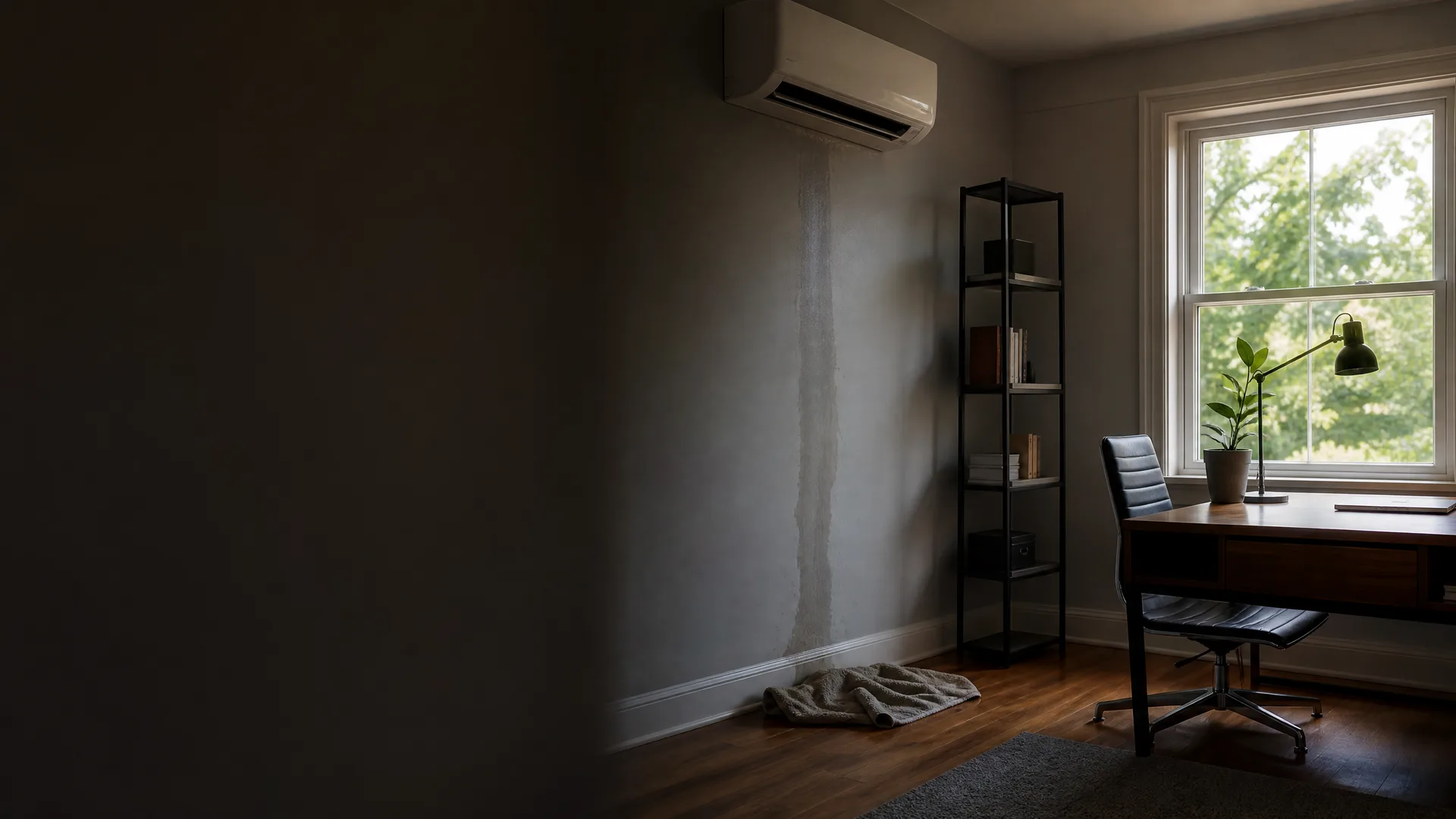
You're working at the desk in your home office on a July afternoon, air conditioner running steady against the heat outside, when you notice the wall under the mini split looks dark. A streak of water has run down the drywall and pooled near the baseboard. You go grab a towel and lay it on the floor under the unit, but water keeps beading along the bottom edge of the indoor unit and dripping. The unit is still blowing cold air, still running fine as far as you can tell, but now there's a towel on your office floor and a wet patch on the wall you didn't have this morning.


The pro who reaches out is licensed in Tennessee.
Describe your mini split job, and a local pro who handles it gets in touch.
There's no charge for the request.
You'll notice the room not warming up the way it should. The display still says defrost, the fan has slowed or stopped, and cold air keeps coming out longer than a normal cycle. Some units click in and out of defrost every half hour on a cold, damp day, never settling back into steady heat. Outside, the coil may show a thick layer of ice instead of a light frost that clears on its own. Tennessee winters put electric heat systems like this to work daily, and a unit that can't finish a defrost cycle is pulling power without heating the house. Left alone through the season, that ice buildup can strain the compressor.
Frost builds on the outdoor coil during cold, damp weather.
A sensor reads the coil temperature and triggers the defrost cycle.
The reversing valve switches the system into cooling mode briefly.
Hot refrigerant flows outside to melt the frost off the coil.
That's how long a normal defrost cycle runs. If your unit is still showing defrost well past that, something is stopping it from switching back to heat.
Electric heat already runs the bill up on its own in winter. A unit stuck defrosting instead of heating burns power while the room stays cold.

If the cycle won't let go, the room it heats starts losing ground. You'll feel it first in whichever room that unit covers, the air going cool instead of warm while the rest of the house holds steady on electric heat elsewhere. On a cold January night that's the room you notice getting colder before you notice why. Run that way long enough and the outdoor unit can end up carrying ice it never clears, which puts strain on the system every time it tries to switch back.
You don't have to figure out whether it's the sensor, the reversing valve or the board behind it. That's a judgment call for someone who works on these units all winter in homes around Tennessee and has seen which part usually gives out first on a system like yours. Get matched with a local contractor who can look at your specific unit, and they'll be the one reaching out, not a handful of companies competing for the job.

Summer here runs humid even on days that don't feel that hot, with a dew point averaging 66°F across June, July and August according to NOAA climate data for Tennessee. That kind of moisture keeps your mini split's cooling cycle working longer just to pull the wet out of the air, not just drop the temperature. It also means the outdoor coil and drain line stay busy for months at a stretch. A clogged drain or a coil that can't shed moisture fast enough shows up as water where it shouldn't be or a room that stays cool but still feels damp.
NASA POWER T2MDEW county cells weighted by homes
A defrost cycle that starts, clears the coil, and hands the system back to heat within a few minutes is doing its job. One that drags on, repeats every hour, or leaves the room cold while the display still reads defrost is not. That difference is the whole answer. You don't need to guess at it or wait out the winter to see if it gets better on its own, because a stuck defrost cycle usually points to something specific: a sensor reading wrong, a reversing valve not switching back, a coil that stays iced because airflow across it is weak. A local contractor who works on mini splits all season can look at your unit and tell you which of those it is. You're the kind of homeowner who catches a small problem before it turns into a cold room all winter or a bigger repair later, and this is that kind of problem. Get matched with someone licensed near you in Tennessee who can take a look.




The right pro for this job
Your request stays with one local pro.