Why your mini split blows cold air in Tennessee

Tell a local repair pro what your mini split is doing.

Find a pro near me

Why is my mini split blowing cold air when it's set to heat?

Set to heat, vents open, and all that comes out is cold air. In a Tennessee winter that's not a small thing to live with, especially in a home that depends on electric heat to begin with. You want to know whether this is normal for a mini split or whether something's actually wrong.

It's likely low on refrigerant or stuck in defrost

A mini split moves heat from the outdoor air into your home using refrigerant, and that process needs a full charge to work. If the charge has dropped, the indoor unit can run without producing warmth, and the air blowing out feels cold even though the system is trying to heat. It can also sit in a defrost cycle longer than normal, clearing ice off the outdoor coil, which feels the same way from inside. A outdoor unit caked in ice or running in freezing temperatures without defrosting properly points to the same problem. Either way, this isn't something to wait out through a cold snap. A technician who works on mini splits checks the charge and the defrost board to find which one it is.

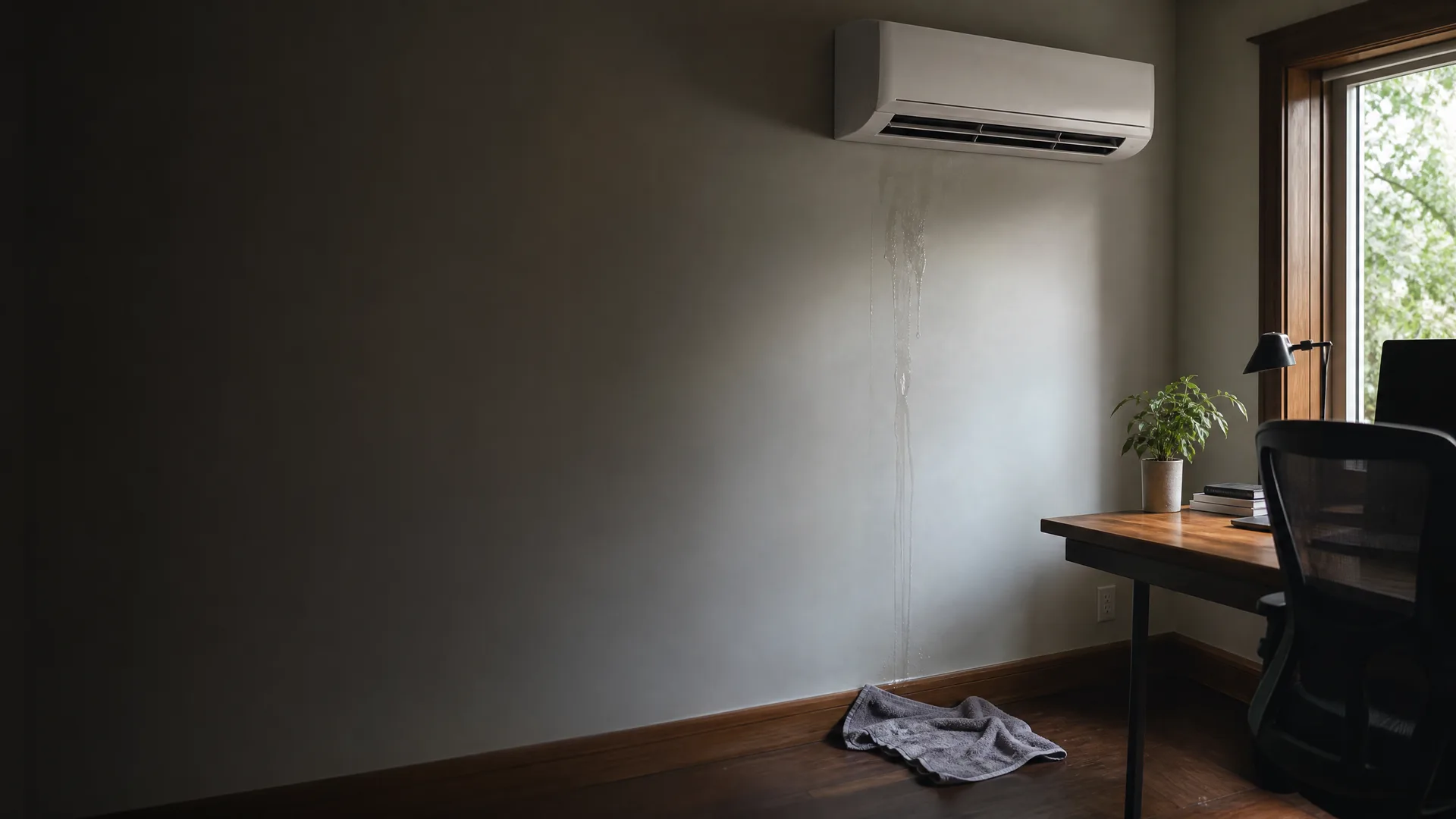
A wall-mounted mini-split air conditioner with a water streak running down the wall beneath it to a gray towel on the wood floor, beside a desk with a potted plant, lamp, and office chair near a window.

You're at your desk on a July afternoon, trying to get through a stretch of work before the heat outside gets worse. The mini split has been running most of the day against the sticky air. You notice the wall under the indoor unit first, a dark wet streak running down toward the baseboard. By the time you get up to look, it's already dripped onto the floor and you've grabbed a towel to keep it from spreading under your desk. The unit is still blowing cold air like nothing's wrong. You check the thermostat setting again, more out of habit than anything, because the problem clearly isn't the temperature. It's the water coming from somewhere inside that wall-mounted box above your head.


Defrost Cycle or a Real Problem

Normal defrost cycle

  • In cold weather the outdoor unit ices up, and the system reverses itself for a few minutes to melt that ice off the coil.
  • During that reversal the indoor unit blows cold or cool air because the refrigerant is running backward on purpose.
  • This usually lasts a few minutes at a time and the outdoor fan slows or stops while it happens.
  • Once the coil clears, the system switches back to heat and the air at the vents warms up again.
  • You'll notice this more on the coldest days, when the outdoor coil picks up frost faster.

A fault, not a cycle

  • The air stays cold well past a few minutes and never switches back to warm on its own.
  • The outdoor unit isn't running at all, or it's running but the coil looks heavily iced rather than lightly frosted.
  • A low refrigerant charge keeps the system from building enough heat to send warm air through the vents.
  • A failed reversing valve can stick the system in cooling mode even though the thermostat is set to heat.
  • If this is happening in a home that relies on the mini split for heat, it's worth having someone look at the outdoor unit and the refrigerant charge.
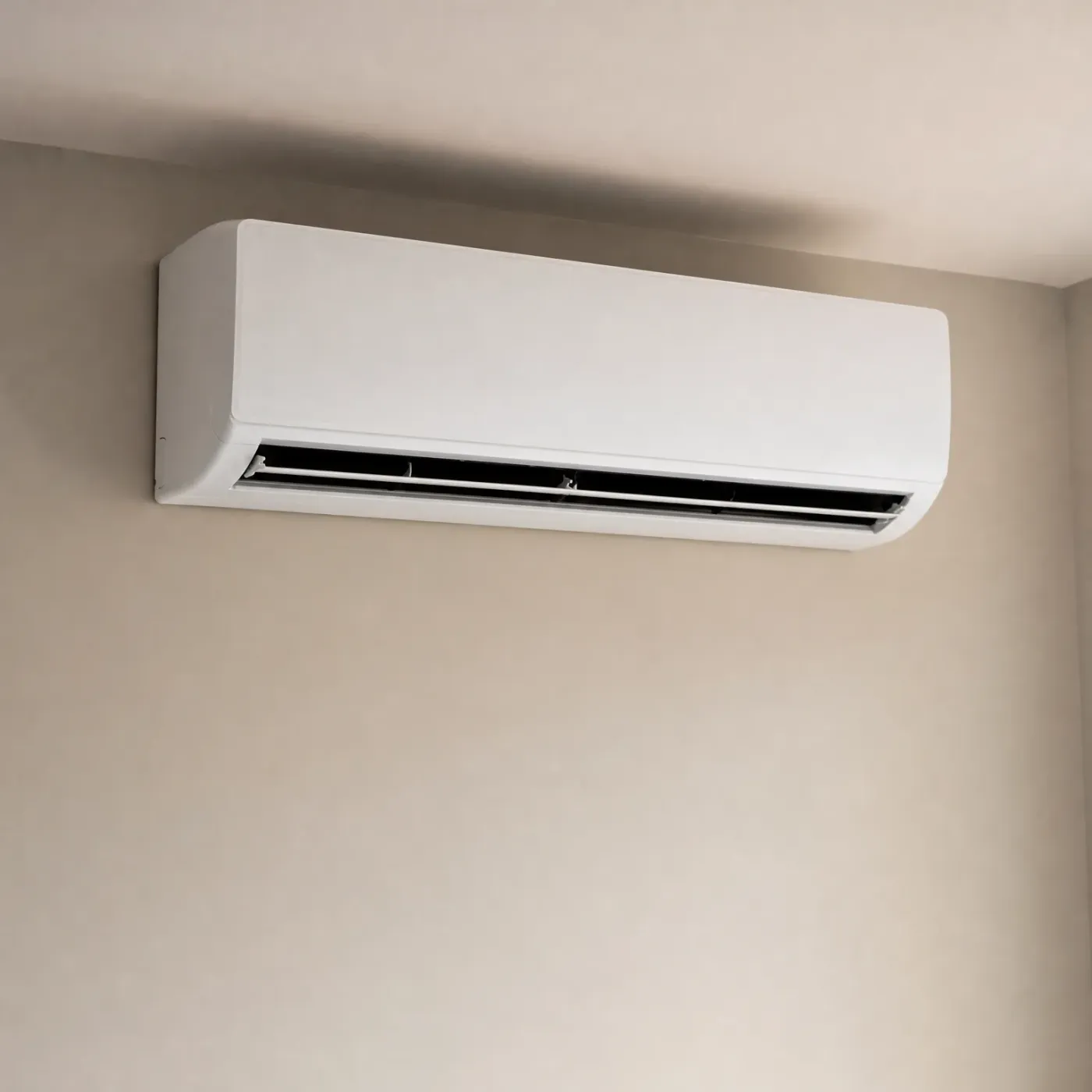
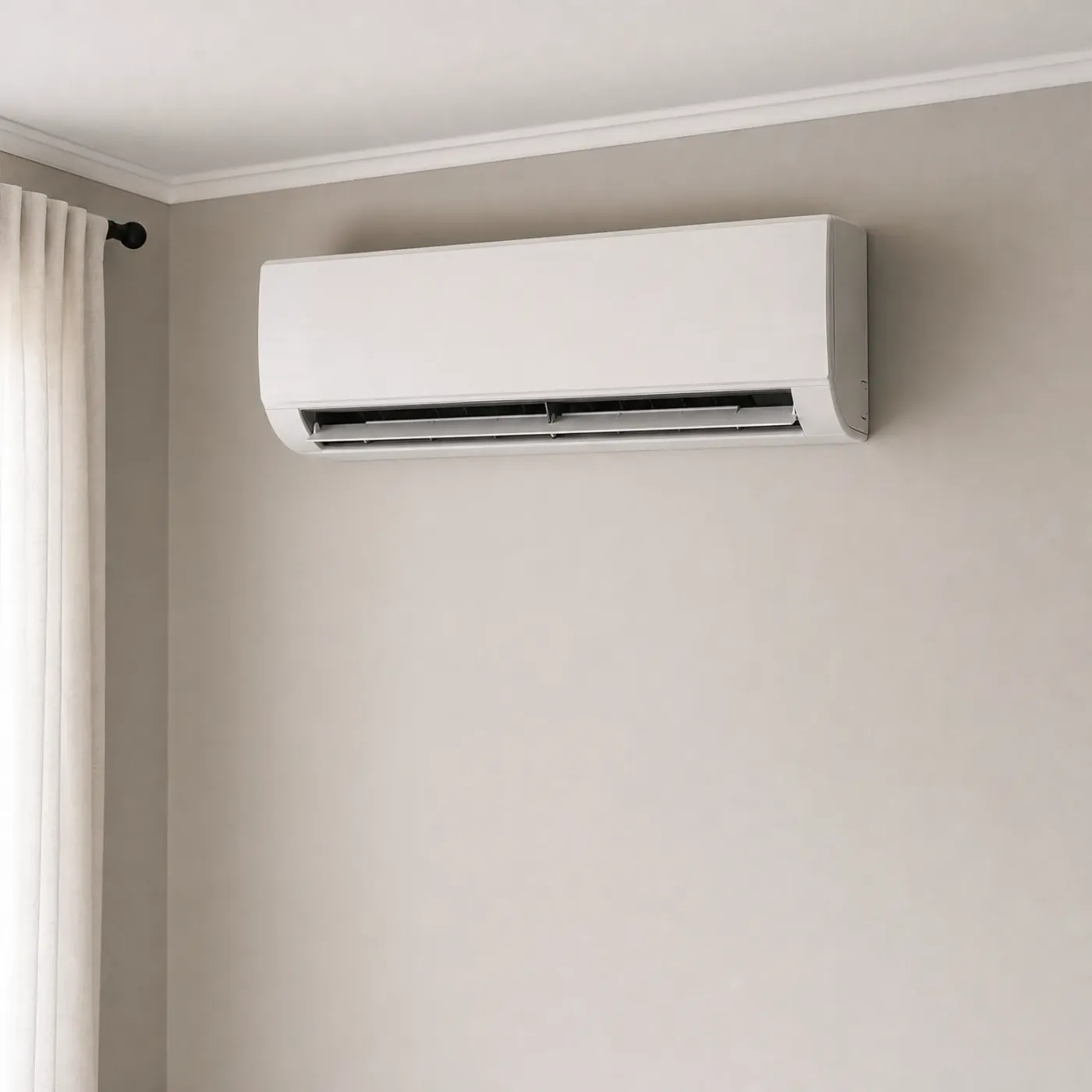
A white wall-mounted mini-split air conditioner installed near the ceiling on a plain beige interior wall.

Running the way it should

This is what a mini split looks like when it's keeping up. The panel stays closed, the grille does its job, and the case stays clean because the unit isn't struggling. If yours still looks like this, the cold air you're getting is probably just defrost doing its thing.

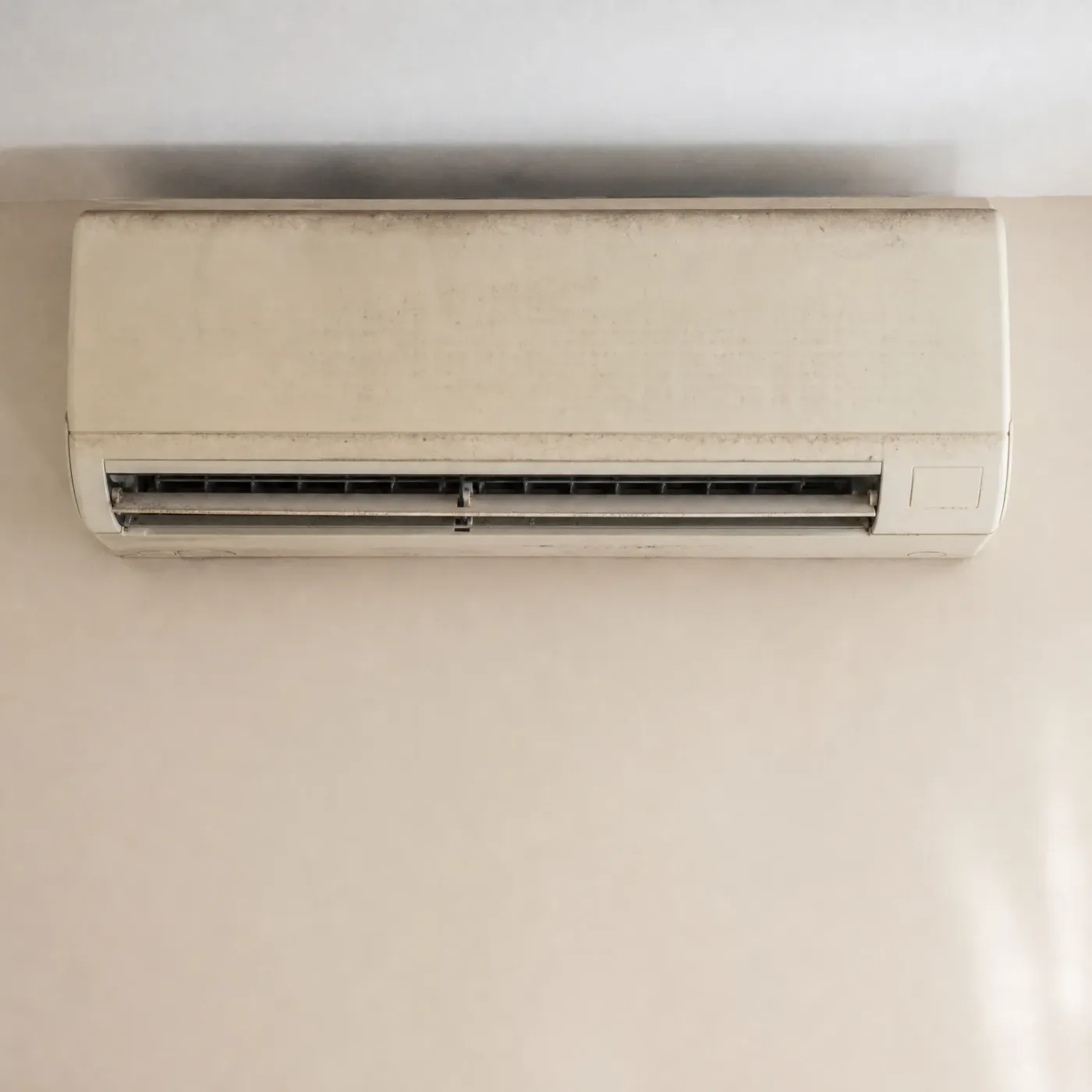
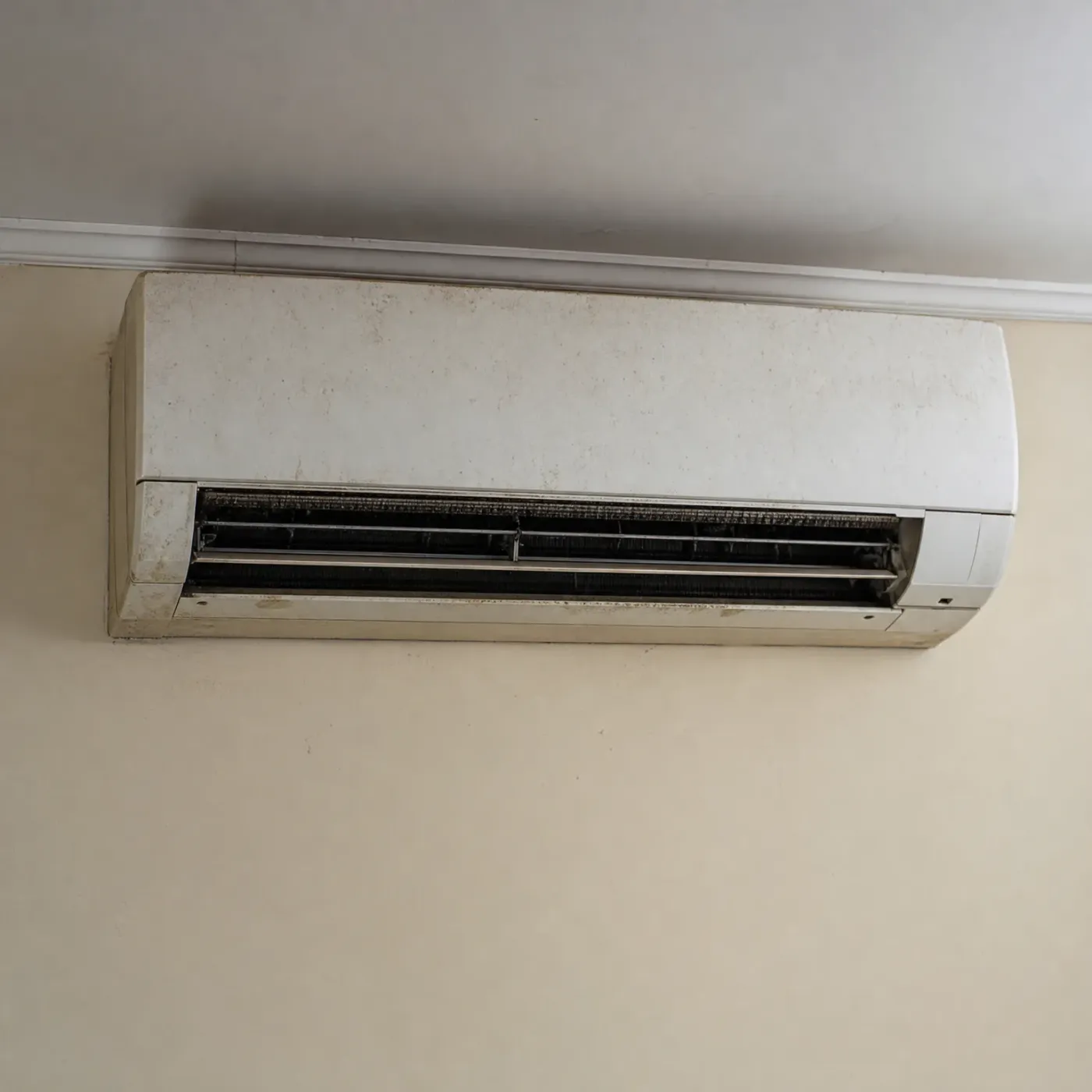
A dusty, discolored wall-mounted mini-split air conditioner unit near the ceiling of a plain beige interior wall.

Running the way it shouldn't

Discoloring and dust like this usually mean years of wear without much attention. A unit in this shape is more likely to blow cold air because something inside, a sensor, a reversing valve, a low charge, has worn out rather than because it's defrosting on schedule. That calls for someone who works on these units every season and knows what tends to go first.

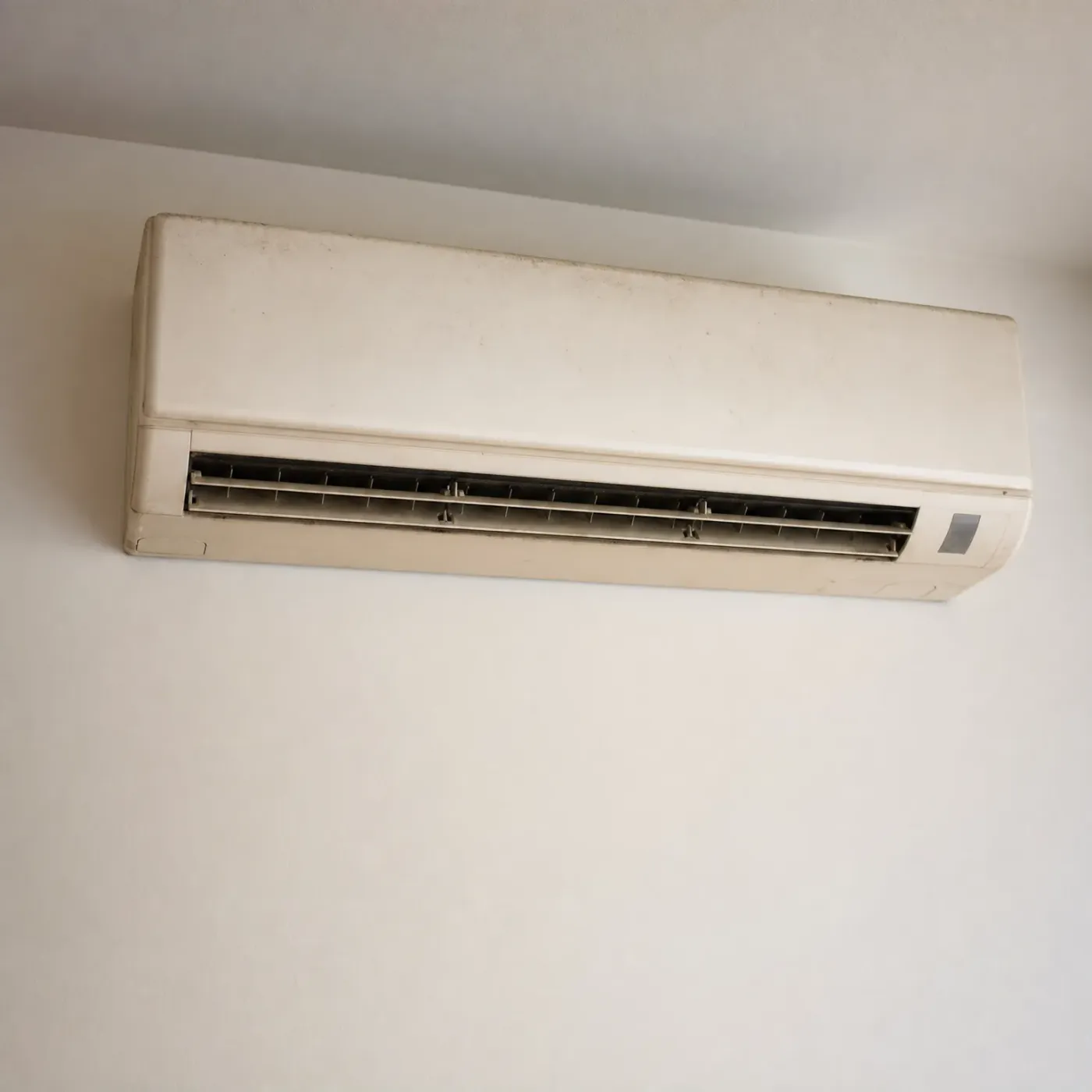
A wall-mounted mini-split air conditioner indoor unit with a discolored cream plastic casing and dusty outlet vanes, installed high on a plain light-colored interior wall near the ceiling.
Before you get your mini split repair
A white wall-mounted mini-split air conditioner installed high on a beige interior wall near the ceiling molding, with a light curtain and curtain rod at the left edge.
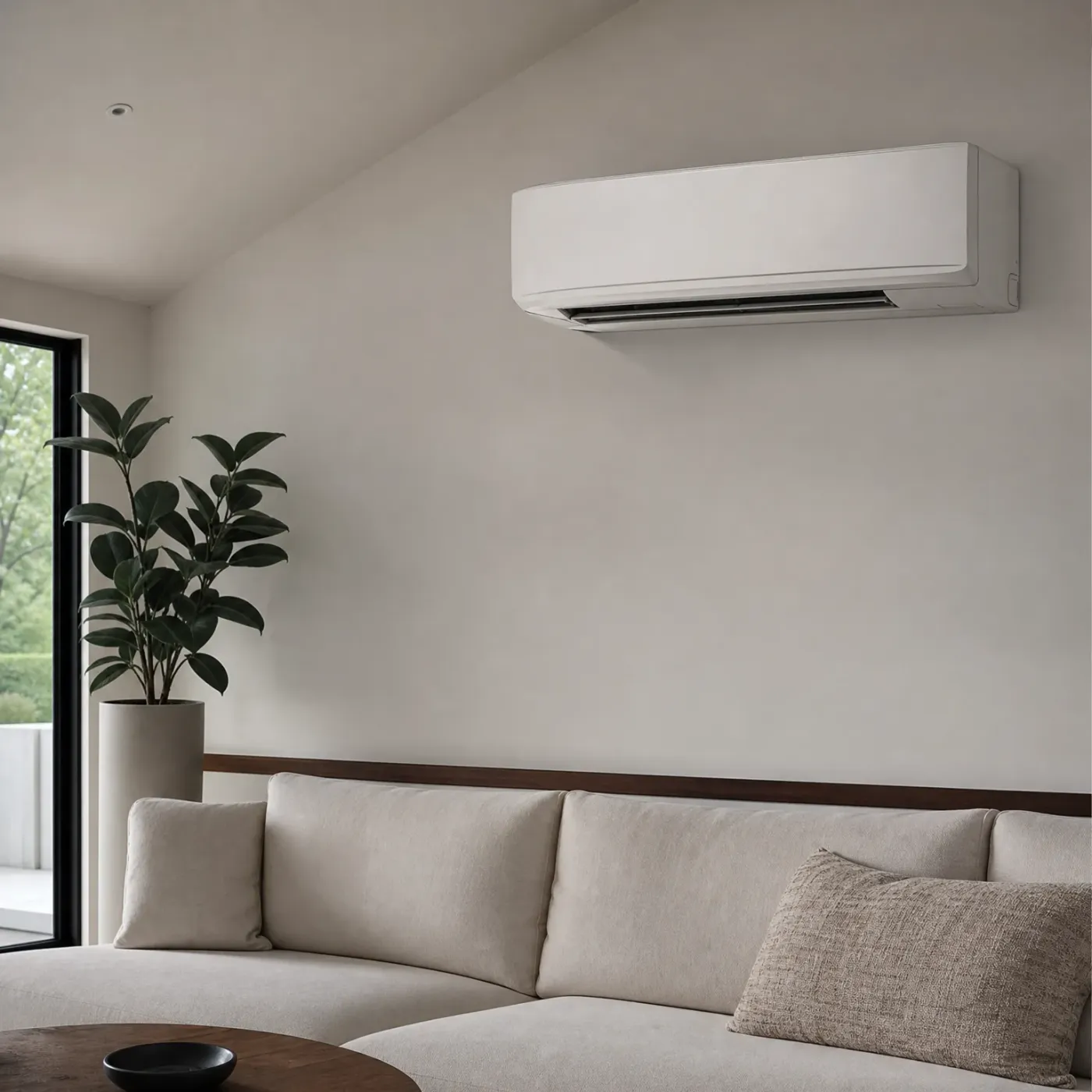
After you get your mini split repair
A white wall-mounted mini-split air conditioner near the sloped ceiling of a living room with a light sectional sofa, cushions, a potted plant, and a window showing greenery.

The right pro for this job

The pro who reaches out is licensed in Tennessee.

Say what's going on with your mini split, and a pro who works on them reaches out.

Get my match

No charge to send it. You decide if you hire them.

A gray-haired man in a dark long-sleeve shirt sits on a gray sofa in a living room, looking toward a sunlit window with sheer curtains.
A gray-haired man in a dark green sweatshirt sits on a sofa in a living room, looking toward a bright window, with a houseplant, lamp, fireplace and framed art behind him.
A gray-haired bearded man in a dark green collared sweater sits on a sofa in a living room with a window, houseplant, floor lamp and bookshelves, looking off to the side.
A gray-haired man in a dark green sweater sits on a sofa in a sunlit living room, looking off to the side, with a framed landscape painting, dining table and shelving behind him.

What's Actually Happening Inside

  • A mini split heats by reversing the refrigerant cycle, pulling heat from the outside air and moving it indoors through the coil.
  • The reversing valve is the part that switches the system between cooling and heating, and a stuck valve leaves it running the cooling cycle no matter what the thermostat says.
  • Low refrigerant charge keeps the indoor coil from reaching a temperature warm enough to heat the air passing over it.
  • A failing thermistor can tell the control board the room is warmer than it is, so the unit never switches into full heating output.
  • The outdoor fan motor has to run during heating too, and if it's weak or seized, the coil can't absorb enough outside heat to warm the air inside.
  • Some units default to fan-only operation when a safety sensor trips, which feels like cold air even though the compressor isn't running at all.

A mini split doesn't make heat the way a space heater does. It moves heat. In heating mode the refrigerant cycle runs backward from cooling, pulling warmth out of the outside air, even cold air, and carrying it through the lines to the indoor coil. The reversing valve is what flips the system between those two directions. When that valve sticks, the thermostat can say heat all it wants, the system is still running the cooling side of the cycle, and cold air is what comes out of the vents.

Refrigerant charge matters just as much. If the system is low, the indoor coil can't get warm enough to actually heat the air blowing across it, so you get airflow without real warmth behind it. The thermistor plays a part too. It's a small sensor that tells the control board how warm the room already is, and if it's reading wrong, the board may hold back and never push the unit into full heating output.

Outside, the outdoor fan motor has to keep moving air across that coil even in winter, because that's where the heat is coming from. A weak or seized motor starves the coil of outside air and the indoor side never warms up. And sometimes there's no failure in the heating parts at all. A tripped safety sensor can drop the unit into fan-only mode, where air keeps moving but the compressor has shut down, which feels exactly like cold air on a cold day.

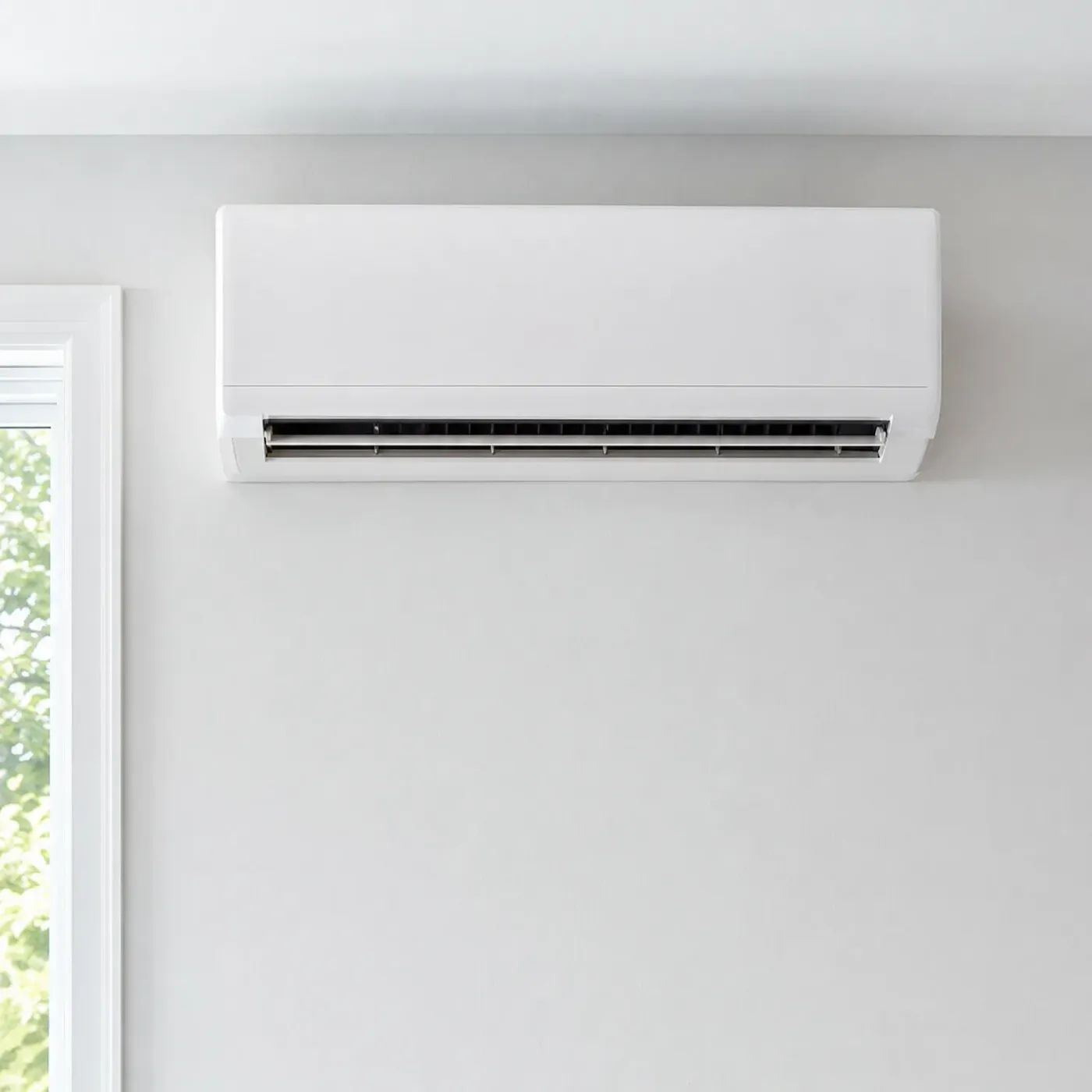
A white wall-mounted mini-split air conditioner unit installed high on a light gray interior wall near the ceiling, with a white-framed window and green foliage visible at the left edge.
A clean mini split like this pulls air through a clear filter and coil, so the heat it makes actually reaches the room.
A dusty white wall-mounted mini-split air conditioner installed high on a beige interior wall below a molded ceiling trim.
A unit left dirty like this struggles to move heat at all, and a technician checks the coil and filter before anything else.

What you're probably noticing right now

You've got the thermostat set to heat and the indoor unit running, but the air coming out feels cold on your hand or your face when you stand near it. The room isn't warming up the way it should, so you're layering up inside or running a space heater to make up the difference. If this has been going on for more than a day or two, it isn't a defrost cycle anymore. Since most homes in Tennessee heat with electricity, a mini split that won't actually heat often means it's running constantly and pulling power without putting out warmth, which shows up on your electric bill even though power here is cheap. Left alone, the room stays cold and the unit keeps working for nothing.

  1. Thermostat calls for heat and signals the indoor unit

  2. Reversing valve shifts to send refrigerant through the system backward

  3. Outdoor coil pulls heat from the outside air into the refrigerant

  4. Compressor moves that refrigerant inside to the indoor coil

Power costs 13.22 cents per kilowatt-hour statewide

At 13.22 cents per kilowatt-hour, a mini split that's actually heating is one of the cheaper ways to warm your home. When it's stuck blowing cold air instead, it's running the compressor and fans without putting out any heat, so you're paying that rate for nothing.

EIA-861 2025 statewide residential average

A mini split blowing cold air on the heat setting usually comes down to one thing: a defrost cycle that runs longer than it should, or a reversing valve that's stuck and won't switch back. Sometimes it's a refrigerant charge that's too low to move heat the way it's supposed to. None of these fix themselves, and running the unit while it happens just adds to your power bill without warming the room. Someone who works on these systems every winter in Tennessee can tell the difference between a normal few minutes of defrost and a valve that's failed, usually by watching how long the cold air lasts and checking the coil and charge. You don't need to know which one it is before you call. You just need someone qualified to look at your specific unit and tell you straight. Once it's diagnosed and fixed, the heat setting will do what it's supposed to do, and the room will actually warm up when the thermostat calls for it.

A woman with shoulder-length dark brown hair in a cream knit cardigan sits in an upholstered armchair beside a window, looking off to the side, with a white bookshelf and potted plant blurred behind her.
A woman and a child wrapped together in a thick knitted blanket on a sofa, both with eyes closed, with a lit table lamp and houseplant in the dim background.

Mini Split Repair

Matched to your mini split job

Only one pro gets your request, so you hear from one company.

A black smartphone standing upright against a plain light gray background, its screen filled with solid green.
Step 1 of 3: Equipment