Why your mini split smells when heating in Tennessee

Step 1 of 3: Equipment

A musty or sour smell when your mini split is heating usually means mold or mildew growing on the indoor coil or the filter behind it. In heat mode, that coil sits warm and still picks up moisture from the air in the room, and dust on the filter gives mold something to feed on. A burning smell is different and points to dust baked onto the heating element or a motor working harder than it should. Either way, the smell is the system telling you something is sitting in there that shouldn't be, not something you have to live with until it gets worse. A quick cleaning or a part replacement usually clears it, but running a mini split that smells for weeks can mean breathing that into your bedroom or living room every time the heat kicks on.

A smiling man in a navy long-sleeve shirt sits at a wooden table in a kitchen and dining area, with a ceramic mug, a potted plant, and a sliding glass door behind him.
A smiling bearded man in a green henley shirt stands at a kitchen island with a gray mug, looking off to the side, with a dining area and shelves blurred behind him.
A smiling bearded man in a navy sweater sits at a white kitchen island with a ceramic mug, with open shelves, potted plants and a range hood behind him.
A smiling man in a dark olive long-sleeve shirt sits in a kitchen beside a counter with a dark mug, with a dining table, sideboard and hallway visible in the blurred background.
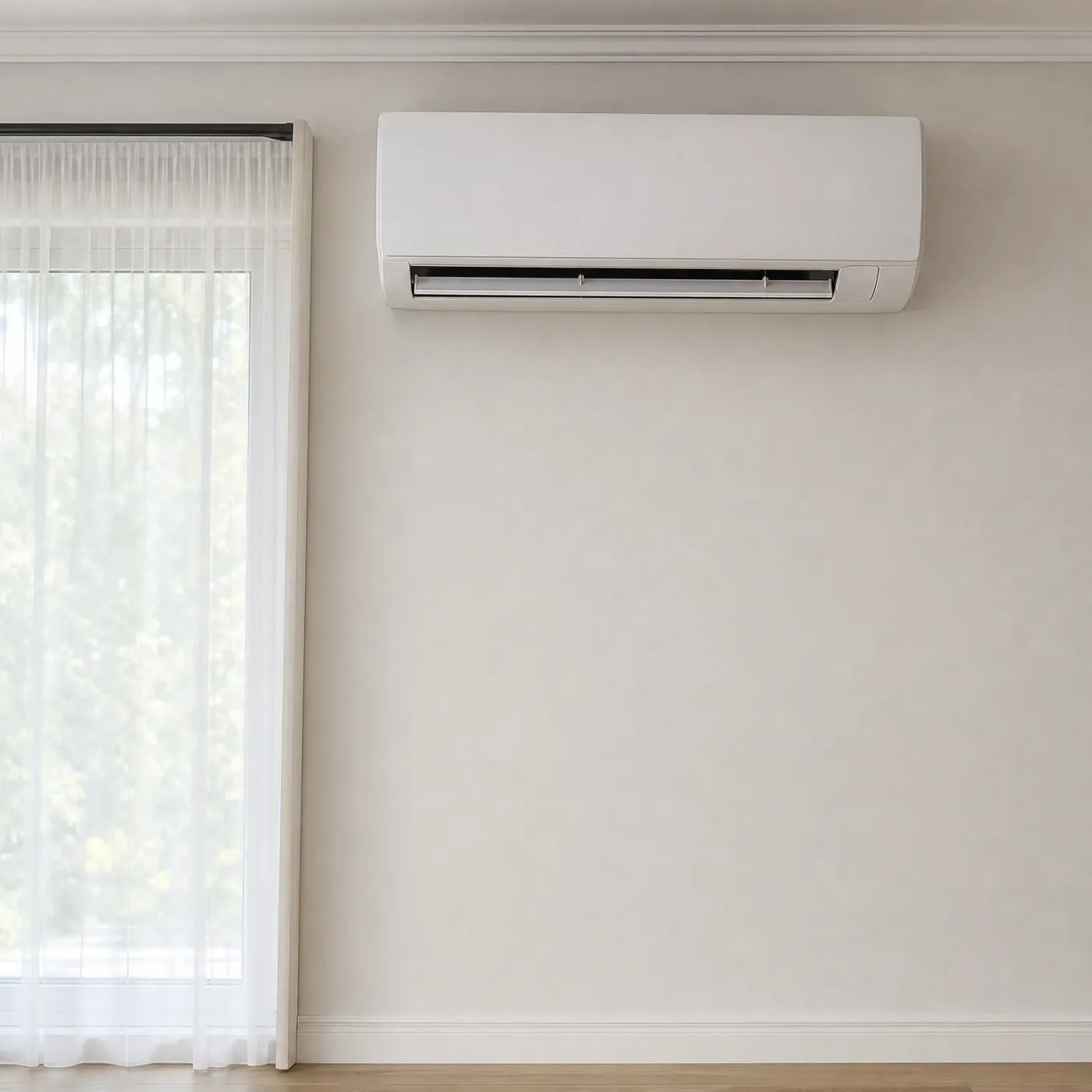
A white wall-mounted mini-split air conditioner on a beige interior wall, next to a window with sheer white curtains and green foliage outside.
A clean mini split like this moves heat without pulling any smell into the room, because the coil and filter behind that panel are clear.
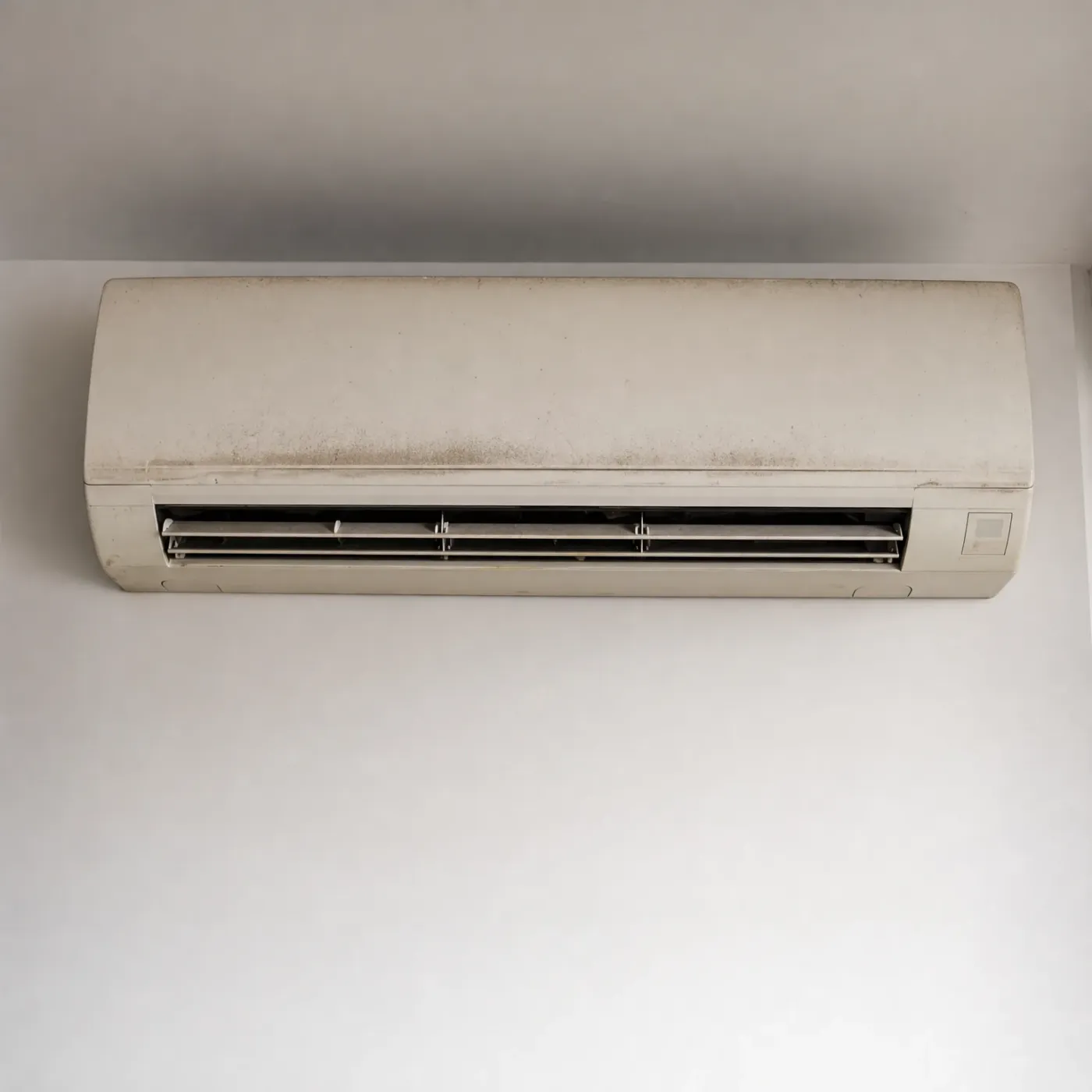
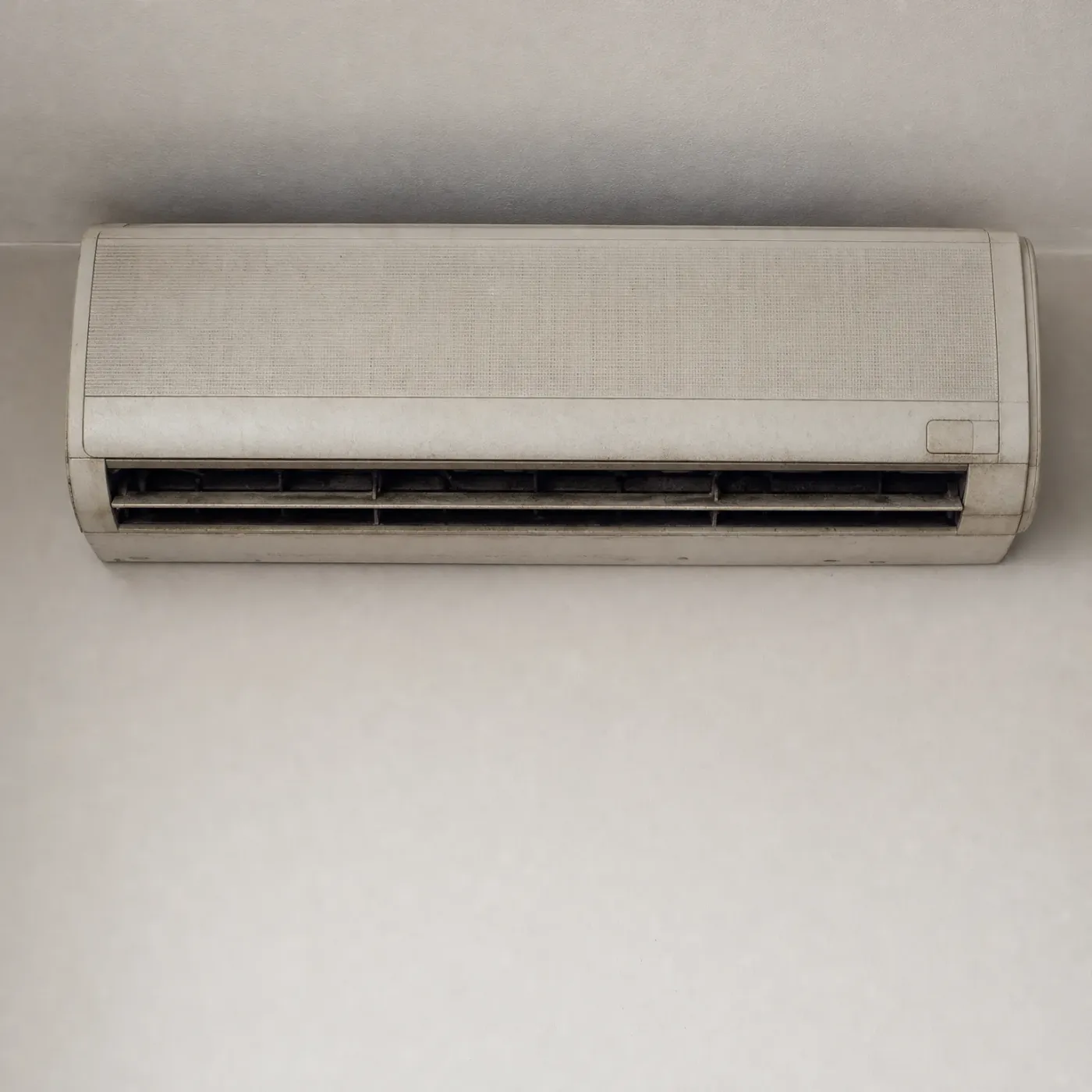
A dusty, discolored wall-mounted mini-split air conditioner indoor unit on a plain white wall, with its horizontal louvers and vent grille visible.
A unit left dusty like this breeds the mold and mildew behind that smell every time the heat kicks on.
  1. Dust and skin cells settle on the filter behind the front panel.

  2. Heat mode keeps the indoor coil warm and damp.

  3. Mold and mildew take hold in that warm, dusty film.

  4. The blower pushes air across the coil and into the room.

Clean the Filter or Call for the Coil

Clean the filter yourself

  • You can pull the front panel off most indoor units without any tools and slide the filter out.
  • A rinse under the tap and a few hours to dry fully gets rid of the dust film mold needs to grow.
  • This does nothing for the coil itself, so if the smell started there, it comes back within days.
  • Running the fan-only mode for 20 or 30 minutes after you turn off the heat helps dry the coil before it sits damp overnight.
  • It costs nothing but your time, and it is worth doing before you call anyone.
  • If the smell is still there after the filter is clean and dry, the mold is on the coil, not the filter.

Have a contractor clean the coil

  • The coil sits behind the filter and fan, and getting to it means opening the unit in a way most homeowners shouldn't attempt themselves.
  • A contractor can clean the coil directly, which clears mold a filter rinse never reaches.
  • They can also check the condensate drain, since a clogged one leaves standing water that feeds the smell back.
  • This is the fix when the smell comes back right after you've already cleaned the filter.
  • Once you send the form, finding someone to do this stops being your job, no searching, no calling around, no explaining the smell three different times.
  • A professional cleaning also tells you whether the mold has spread far enough to affect how the unit heats, which a filter rinse can't show you.
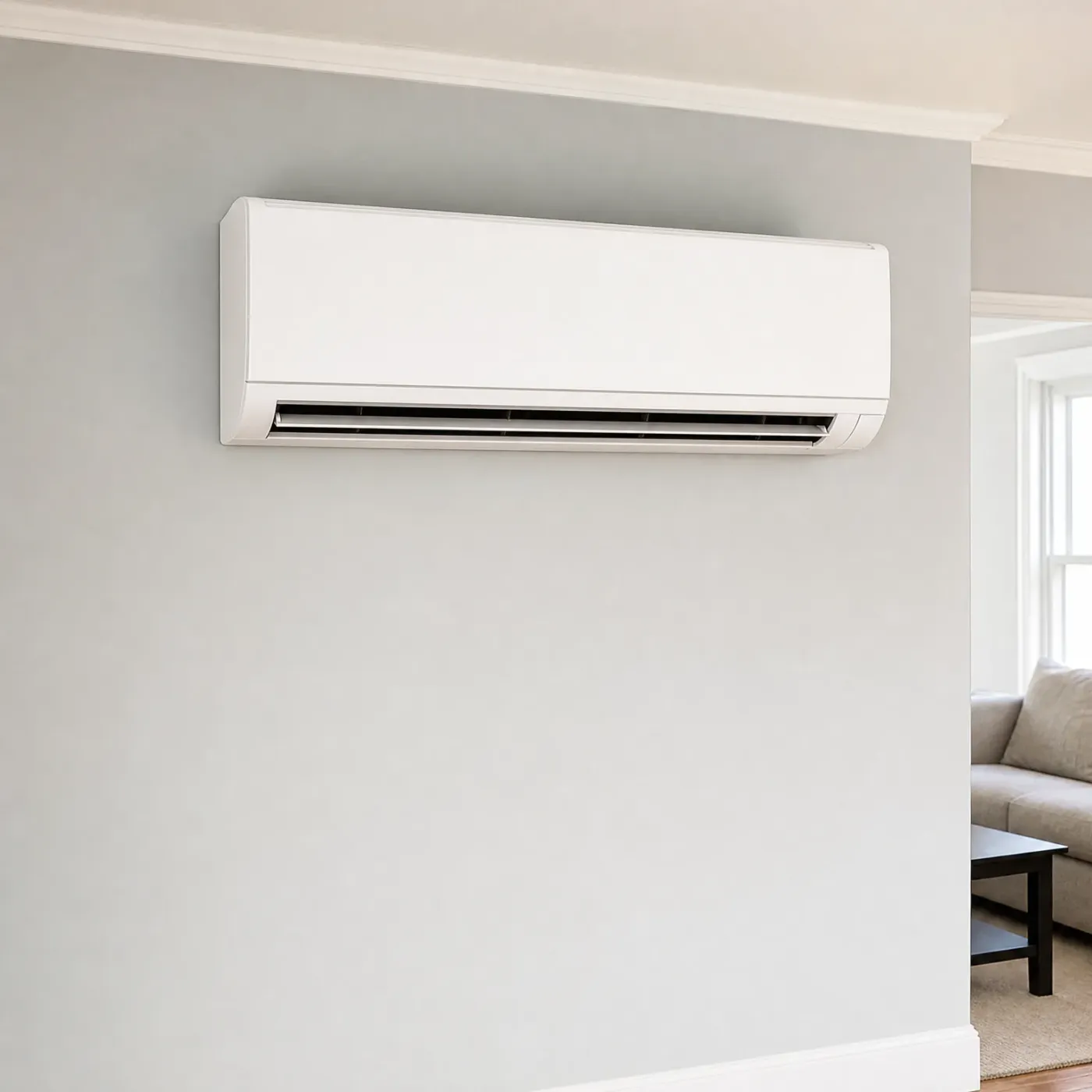
A white wall-mounted mini-split indoor unit installed high on a gray interior wall, with a sofa, dark table and window visible in an adjoining room to the right.

Running clean

A mini split like this has no smell behind it. The coil and filter stay clear, so heat mode just moves warm air into the room. Nothing sitting on the panel, nothing yellowing on the casing. Air comes out the way it went in, just warmer.

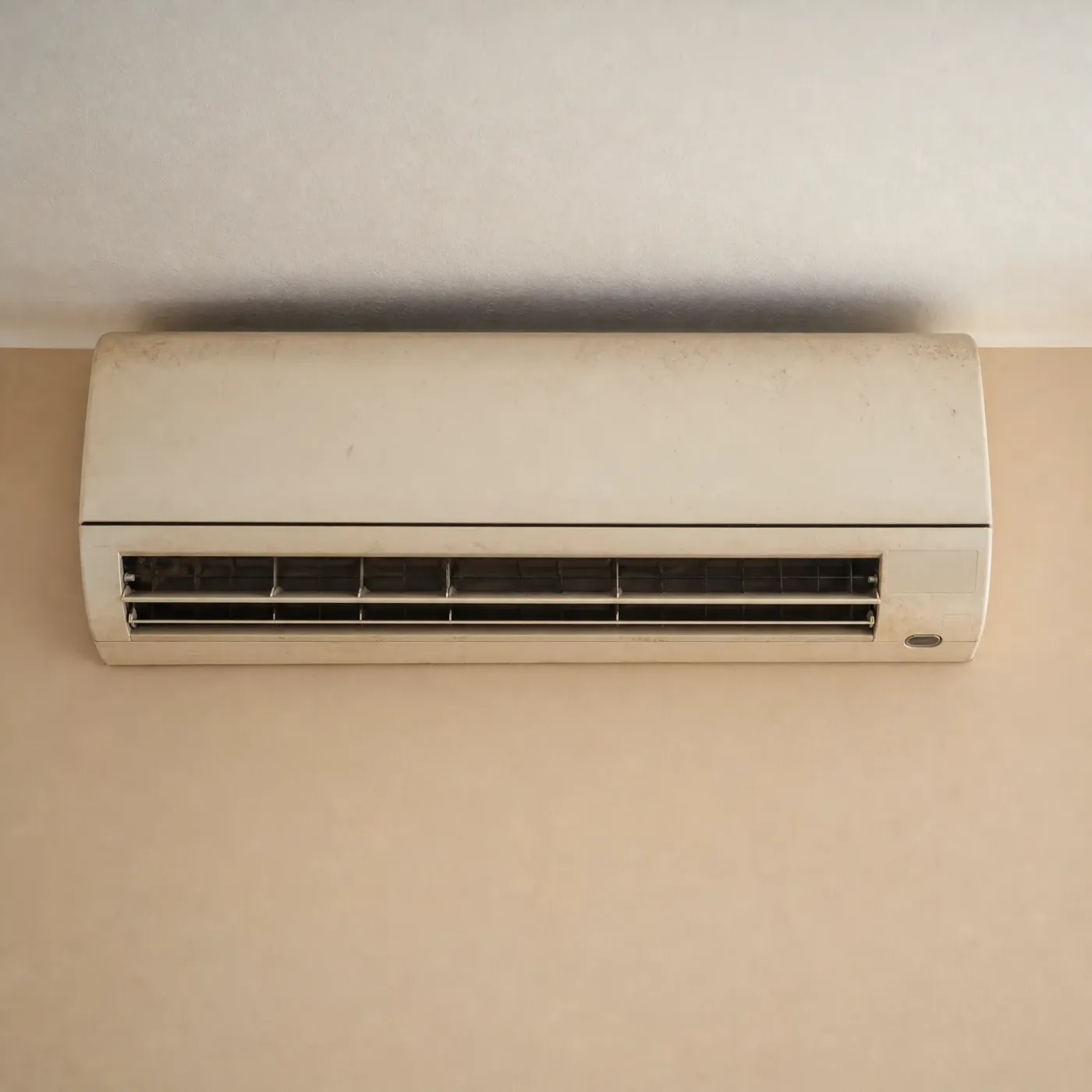
A wall-mounted mini-split air conditioner indoor unit with a dusty beige casing and dark louvered vent, installed near the ceiling on a plain beige wall.

Due for a look

Yellowing and dust on the casing usually mean the same film has built up where you can't see it, on the filter and the coil behind the vent. That's what feeds the smell once heat mode warms the coil. A contractor can get behind that panel and clean what a rinse at home can't reach.

What are you actually smelling right now

Walk up to the indoor unit while it's running in heat mode. If the smell gets stronger right at the vent, that confirms it's coming from inside the unit and not somewhere else in the room. You might notice it fades after the unit's been running a few minutes, or it might hang in the air the whole time it's on. Check the front panel too. A thin gray film across it, or a yellowish tinge near the vent slats, usually means dust has been building up longer than a quick wipe-down would fix. None of this means the unit is broken. But left alone, that mold keeps growing every time the heat runs, and the air moving through it carries more of it into the room your family breathes.

A dim room with a white wall-mounted mini-split air conditioner above a wall with a vertical line mark, a wooden built-in shelving unit with books and a potted plant at left, and a desk with monitor, keyboard and mesh office chair by a window at right.

It's a January afternoon and you're at the desk in your home office, heat running to cut the chill. You catch the smell first, sour and close, coming off the indoor unit above you. Then you see it: a wet streak down the wall under the unit, darkening the paint. You've already grabbed a towel and laid it on the floor under the drip. The mini split keeps running, blowing warm air that carries the smell further into the room. Outside, Tennessee's cold enough that you're not about to shut the heat off to deal with this later. You stand there looking at the streak, trying to decide how bad it is.


Send one request and you're done looking

Fill out one short form instead of calling around.

You're not committing to anything by asking.

A mini split's indoor coil never gets hot enough to kill mold the way a gas furnace's heat exchanger does, so once mildew takes hold, heat mode just keeps feeding it warm, damp air.

That's why the smell comes back every winter electric heat runs here unless someone cleans the coil and filter, not just once but as a regular habit.

A dusty white wall-mounted mini-split air conditioner indoor unit with open louvers, installed near the ceiling on a plain light-colored wall.
Before you get your mini split repair
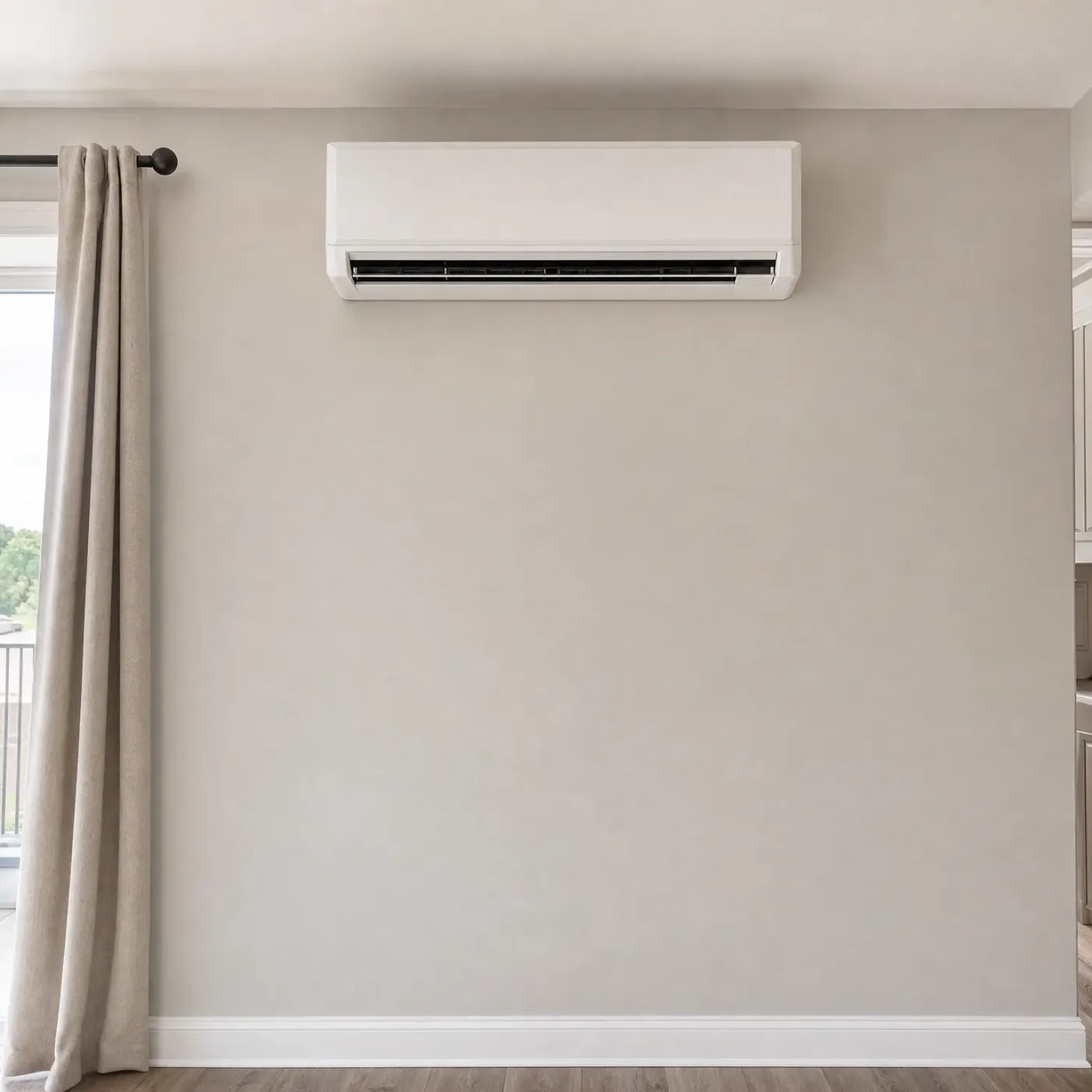
A white wall-mounted mini-split air conditioner unit high on a light gray interior wall, with a beige curtain and window at the left and wood-look flooring below.
After you get your mini split repair

Power costs 13.22 cents per kilowatt-hour statewide

Electricity runs 13.22 cents per kilowatt-hour across Tennessee, and since most homes here heat with it, your mini split carries the whole job through the cold months. That's more reason to get the smell sorted now rather than let a tech spend a service call hunting down mold instead of just clearing it.

EIA-861 2025 statewide residential average

A closed silver laptop and a white cup of coffee on a saucer sit on a wooden table in front of a wooden chair, a plain beige wall, a potted leafy plant and a window with greenery outside.

What this means for your house this winter

If that smell is coming off the indoor unit, it is going into whatever room that unit heats. A bedroom you run all night, a home office you sit in for hours, a living room where the kids play on the floor near the vent. The mold behind that smell does not stay behind the panel. The blower carries it out into the air you are breathing in that room, every time the heat runs.

Left alone, it does not fix itself. The coil stays warm and damp as long as you heat with it, and mold does not need much else to keep going. You could spend an afternoon calling around for someone who works on mini splits, explaining the smell to each one, then sitting with a stack of quotes trying to tell a fair price from a markup. Or you could send one form and let a licensed contractor who already does this work sort it out, so the only thing left for you to do is let them in.

A wooden table holding a stone vase with a bare branch, two stacked books and a small dark bowl, beside a window with green foliage outside and a sofa in the dim background.
A single-story red brick building with a shingled hip roof, large windows and a recessed central entry, fronted by a wide empty asphalt parking area with sun glare, surrounded by green deciduous trees.

Summers here run muggy, with the dew point averaging 66°F across June, July and August in Tennessee, according to NOAA climate data. That's damp air sitting in every room your mini split cools, and some of that moisture settles on the indoor coil along with the dust the filter doesn't catch. Flip over to heat mode once the weather turns, and that same coil sits warm instead of cold, which is exactly the condition mold and mildew need to spread on whatever film built up over the summer. So the smell you notice in January traces back to how wet the air was in July.

NASA POWER T2MDEW county cells weighted by homes

Why does the smell only show up when I switch to heat, not when it's cooling?

You run the AC all summer without any trouble, but the first cold morning you switch over to heat, there it is. It makes you wonder if something changed inside the unit, or if the heat itself is somehow the problem. It isn't a new issue showing up. It's an old one finally getting the conditions it needs.

Cooling mode drains the coil, heat mode doesn't

In cooling mode, the indoor coil runs cold and wet, and condensate drips straight into the drain pan and out the line. That constant drip rinses the coil and keeps mold from building up on it for long. Switch to heat and that stops. The coil now runs warm, and any moisture already sitting on it from the humid months just stays put, soaking into the dust and mildew already there. Nothing is draining it away anymore. The smell was likely growing on that coil since summer. Cooling mode just kept flushing it before you could notice. Heat mode lets it sit still long enough for the air moving across it to carry the smell into the room.

A smiling man in a dark blue T-shirt sits on a light gray sofa in a living room with a wooden shelf and window behind him, with a laptop edge visible in the foreground.
A bearded man in a plaid flannel shirt stands indoors looking out a frost-covered window, with a steaming dark blue mug on the wooden sill and snow-covered trees outside.

What the smell comes down to

  • A sour or musty smell in heat mode almost always traces back to mold or mildew on the indoor coil or filter.
  • The smell comes back every winter because the coil never gets hot enough in heat mode to kill what has grown on it.
  • A rinsed filter helps the airflow but leaves the coil itself untouched, so the smell can return within days.
  • Where that air lands matters, whether it is a bedroom you sleep in or a living room the kids use all day.
  • Sorting it now means someone else handles finding a licensed contractor, calling around, and explaining the problem more than once.
  • Once that work is off your plate, what is left is getting the coil actually cleaned before the cold months wear on.

A sour smell in heat mode is mold or mildew on the indoor coil or the filter in front of it, and that is almost always where the search ends once someone looks. The coil stays warm and damp every time heat mode runs, and it never gets hot enough to kill what has already taken hold there, so the smell returns each winter rather than clearing on its own. Pulling the filter and rinsing it helps the air move through cleaner, but the coil behind it stays exactly as it was, and the smell can be back within days. Where that air comes out matters too. A bedroom you sleep in all night or a living room the kids spend their afternoons in gets that air directly, every time the unit kicks on.

None of that changes by waiting. What changes is how much of the work is still yours once you decide to deal with it. Finding a licensed contractor, calling a few to see who answers, explaining the smell and when it started more than once, sorting through quotes that all sound different: that is the part that eats an afternoon or more. Send the form instead and that search is off your hands. What is left after that is straightforward: getting someone out to actually clean the coil, not just the filter, before the cold months put more hours on a unit that is already carrying the house's heat all winter.

Dark metal roofs and a stone chimney of a house seen from above, framed by moss-draped trees, with forested hills and hazy mountains under a cloudy sky in the background.

Finding a pro stops being your job

I'm done searching

It costs nothing to send, and you don't have to hire anyone.

You don't have to track down a mini split repair tech yourself, call around, and explain the smell to three different people before you get a straight answer. Send the request once and the finding part is done.